
"Psychology of Intelligence" Videos Are Surging
Discovered · 4h ago
This upload from MindToAct is at 19.5x the channel's typical views, with 692K views in 22 days.
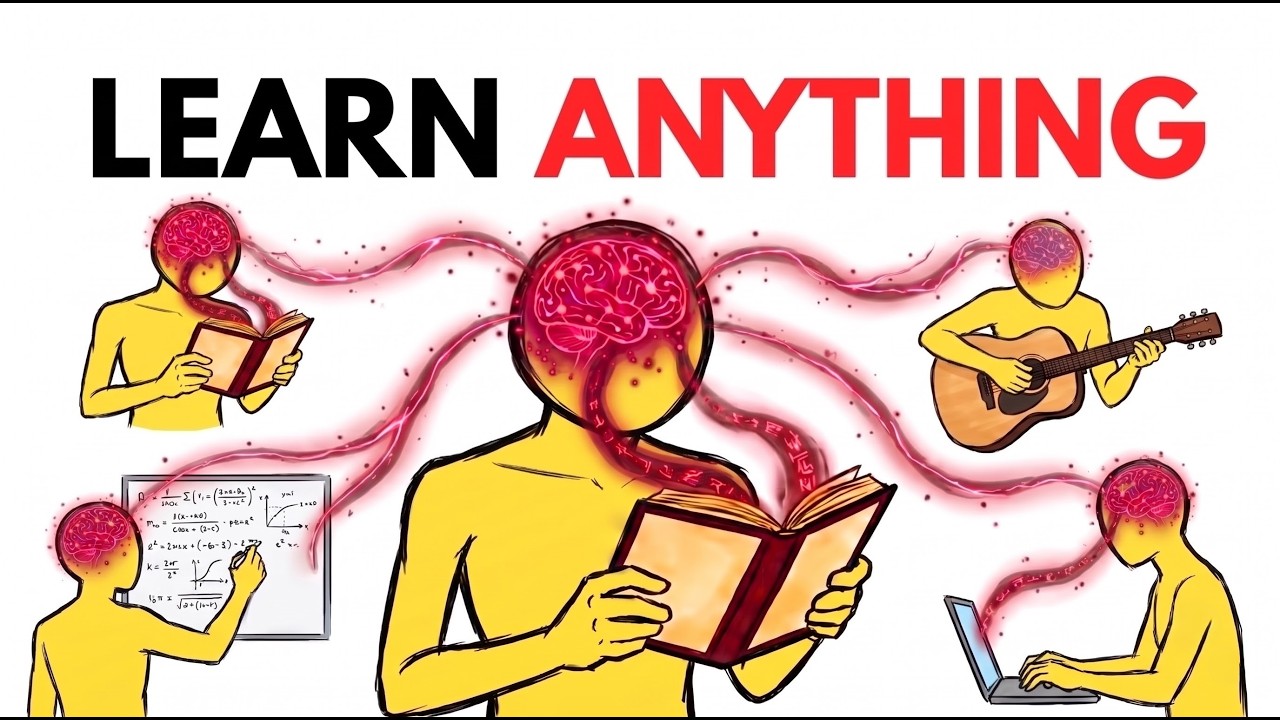
Psychology of Intelligence: Why Some People Learn Instantly (It's Not Talent, It's this.)
Outlier score, channel average, engagement and views per day are calculated by Spikescout. Other figures come from YouTube.
What happened?
Narrated psychology explainers claiming fast learners rely on habits and thinking patterns rather than raw talent are drawing huge audiences. The format promises viewers a way to learn faster than the people around them, which keeps pulling in self-improvement watchers. Multiple channels are running near identical angles on learning speed and intelligence.
How it compares
Views of the channel's recent uploads used for the average
Top comments
- @carolasandrakaty 1w ago
1. Don't just read, try to remember what you just read 2. Practice remembering what you learned a few days before without reading 3. Mix what you learn, do not learn in blocks 4. Explain what you learned without source 5. Connect what you have to learn with other info you already know
3597 replies - @xXTumblinXx 4d ago
Summary: Instead of re reading/repeating what you already know many times back to back, test yourself after already being able to recall the info once. Write or say out loud what you remember, and explain it in plain language as if explaining it to someone who knows nothing about it, you will remember/understand less that you think. What ever you don’t remember, or can’t explain using your own understanding, that’s the part to go back to until you can, then wait until it’s memory starts to fade, not when it’s still fresh or not when it’s completely forgotten, then try to retrieve the info, then wait again, etc, and you will be able to understand and retrieve it better and longer. Connect/attach the info to existing categories you already know or to a bigger picture, vs trying to remember several small separate pieces, and alternate learning different subjects vs just math or biology
1082 replies - @caraainsley78 1w ago
WHAT I LEARNED FROM THIS VIDEO 1. Retrieval of information allows for better recall than reviewing information. 2. The harder it is to remember the more likely it is that the memory will last. 3. The longer the period between study and attempts to recall information the stronger will be the memory if you do recall. 4. The key to better recall is not to study longer but to test what you have learned.
521 reply - @factswithstickyman 2w ago
Sometimes the distance between the life you have and the life you imagine is just one decision: START.
1947 replies - @muutamuuta5217 1w ago
approach that works for me learning languages: constantly switch between tools and methods, like shadowing, passive listening, watch stuff with subtitles, watch stuff without subtitles, talk to chat gpt (switch between male and female voices), ask chatgpt to gen me quizzes, use google translate live to translate stranger convo into the language i'm learning, vibe code my own quiz app... basically stimulate my brain by having things come in different formats and contexts. the more varied and the more unstructured the better. although to be fair, I feel the most important skill is how to keep yourself interested.
15 - @Hiphopasaurus 1w ago
Setting reminder in a few days to watch this again.
392 replies


Description
Two people study the exact same material for the exact same number of hours. A month later, one can barely remember any of it. The other has it permanently. The gap between them has almost nothing to do with talent. In this video, we break down the real psychology of how skills actually stick, drawing on research into storage strength versus retrieval strength, the "fluency illusion" that makes rereading feel productive when it often isn't, the debunked myth of learning styles, and classic findings on expert memory from chess research. Using the metaphor of a worn forest path, we explore why the discomfort of struggling to recall something is often the actual mechanism of learning, not an obstacle to it. You'll learn five concrete laws — retrieval over review, spacing your practice out, mixing problem types, explaining concepts with the source closed, and building connected "chunks" instead of isolated facts — along with why people who learn quickly aren't smarter, they're just running a different, learnable process. This isn't about working harder. It's about understanding which of your effort was actually building anything — and redirecting it. If this gave you something you can actually use starting tomorrow, hit like and share it with the person you know who studies for hours and still panics before every exam. Subscribe to MindToAct so we can keep pulling apart the hidden machinery of the mind together. #psychology #learning #studytips #mentalhealth #memory #neuroscience #selfimprovement #MindToAct
More videos on this topic



“Normal” is the average views of the channel's recent long-form uploads, excluding videos from the last 7 days. Scores and normal views are calculated by Spikescout from public YouTube data; they are not YouTube metrics. View counts last updated Oct 1, 2026.